Sleep disturbances affect a large portion of the population, with many individuals experiencing difficulty either falling asleep or maintaining sleep throughout the night. Insomnia can present as trouble initiating sleep, frequent awakenings, or waking earlier than intended without the ability to fall back asleep. It is seen more often in women, older adults, and those experiencing chronic stress or underlying health concerns.
The 4P Model of Sleep Disruption
A useful clinical framework for understanding insomnia is the “4Ps” model, which explains why sleep issues begin and why they persist.
Predisposing factors
These are underlying characteristics that increase susceptibility to sleep disturbances. This includes factors such as age, genetics, and baseline nervous system sensitivity. Some individuals are naturally lighter sleepers or more reactive to stress.
Precipitating factors
These are events that trigger the onset of poor sleep. Common examples include emotional stress, illness, travel, hormonal changes, or life disruptions. Even short term stressors can initiate a cycle of poor sleep.
Perpetuating factors
These are habits that unintentionally maintain insomnia over time. Examples include increased screen time before bed, irregular sleep schedules, spending extended time in bed trying to “catch up” on sleep, and daytime napping. While often done with good intentions, these behaviours can weaken the body’s natural sleep drive.
Psychological factors
Mental and emotional components such as anxiety, overthinking, and low mood can keep the brain in an alert state, making it difficult to transition into restful sleep.

Root Causes to Consider
Sleep issues are often multifactorial. Some underlying contributors that should be assessed include:
- Blood sugar instability, particularly overnight hypoglycemia
- Chronic stress and elevated cortisol levels
- Restless leg syndrome
- Sleep apnea
- Chronic respiratory conditions such as COPD
Addressing these root causes is essential for long term improvement rather than relying only on symptom management.
How Sleep Is Evaluated
In clinical practice, assessing sleep goes beyond simply measuring total sleep duration. It also includes evaluating sleep quality, such as how rested an individual feels upon waking, their level of daytime functioning, and the presence of symptoms like fatigue, difficulty concentrating, or daytime sleepiness.
A sleep diary is a simple and cost effective tool that tracks sleep timing, awakenings, and daily habits. Over time, it can reveal patterns that contribute to poor sleep.
The Insomnia Severity Index is a validated seven question tool used to assess the degree of insomnia. Scores range from 0 to 28, with higher scores indicating more severe sleep disruption. It helps categorize insomnia into mild, moderate, or severe ranges and can guide treatment decisions. This is not a diagnostic tool but can be helpful in understanding how severe the sleep disruption is.
Practical Strategies to Support Sleep Maintenance
Blood Sugar Regulation
Waking during the night can sometimes be linked to drops in blood glucose levels. When blood sugar falls, the body releases cortisol and adrenaline to compensate, which can lead to feelings of alertness. Some individuals using continuous glucose monitors notice dips in glucose overnight that correlate with night waking. Supporting stable blood sugar through balanced meals, particularly including protein, may help reduce this effect.
Herbal Teas and Evening Rituals
Non caffeinated herbal teas such as chamomile and lavender are commonly used in the evening. These herbs contain compounds that may interact with calming neurotransmitter pathways, including GABA, which can help promote relaxation and support sleep. For preparation, steeping herbal tea for about 5 to 10 minutes is typically sufficient. Covering the cup during steeping may help retain some of the aromatic compounds, particularly in herbs like lavender.
Temperature and Relaxation
A warm bath or shower in the evening can help initiate sleep. The mechanism involves a rise in skin temperature followed by a drop in core body temperature once you step out. This drop mimics the body’s natural preparation for sleep and may improve both sleep onset and continuity. In addition to that, sleeping in cold temperature between 15 to 19 degrees is ideal. This cool range supports the body’s natural temperature drop required to initiate sleep and facilitates deeper REM cycles.
Melatonin Dosing
More melatonin is not necessarily more effective. Research suggests that lower doses, around 0.3 mg, may better reflect physiological levels in the body compared to higher doses such as 1 to 5 mg. Higher doses may lead to next day grogginess or disrupt the body’s natural rhythm.
Progressive Muscle Relaxation (PMR)
This technique involves systematically tightening and then relaxing different muscle groups. It works by reducing physical tension and activating the parasympathetic nervous system, which promotes a state of relaxation. Improved circulation and reduced muscle tightness may also contribute to better sleep quality.
Herbal Support
Valerian root is one of the more commonly used herbal options for sleep. It is thought to enhance GABA activity in the brain, which has a calming effect. While not strongly sedating, it may support relaxation and improve sleep quality in some individuals. In addition to valerian you have many herbs that assist with sleep such as chamomile, lavender, passionflower, lemon balm, ashwagandha, and magnolia bark. Many sleep supporting herbs work through GABA related pathways, helping calm the nervous system. Most are better suited for mild to moderate sleep disturbances rather than severe insomnia. The effects are often gradual and improved with consistent use. When combining herbs with behavioural strategies such as sleep hygiene and stress management tends to be more effective than using herbs alone.
Journalling and Mental Unloading
Journalling before bed can be particularly helpful for individuals who experience racing thoughts. From a physiological perspective, writing things down reduces cognitive load and helps quiet the prefrontal cortex, which is responsible for planning and problem solving. This can reduce mental stimulation and allow the body to transition into sleep more easily. It also creates a sense of closure for the day, which may reduce nighttime rumination.
The Role of Sound in Sleep
Different sound frequencies can influence the sleep environment in unique ways:
White noise
Contains a full range of frequencies at equal intensity and can help mask sudden environmental noises such as traffic or movement.
Pink noise
Has reduced intensity at higher frequencies and resembles natural sounds like rain. Some studies suggest it may support deeper sleep and memory consolidation.
Brown noise
Emphasizes lower frequencies and produces a deeper, more rumbling sound. It may feel more grounding and calming for some individuals.
Green noise
Represents mid range frequencies similar to natural outdoor environments like streams or forest sounds and may promote relaxation.
Blue noise
Focuses on higher frequencies and is less commonly used for sleep but may help mask low frequency background sounds.
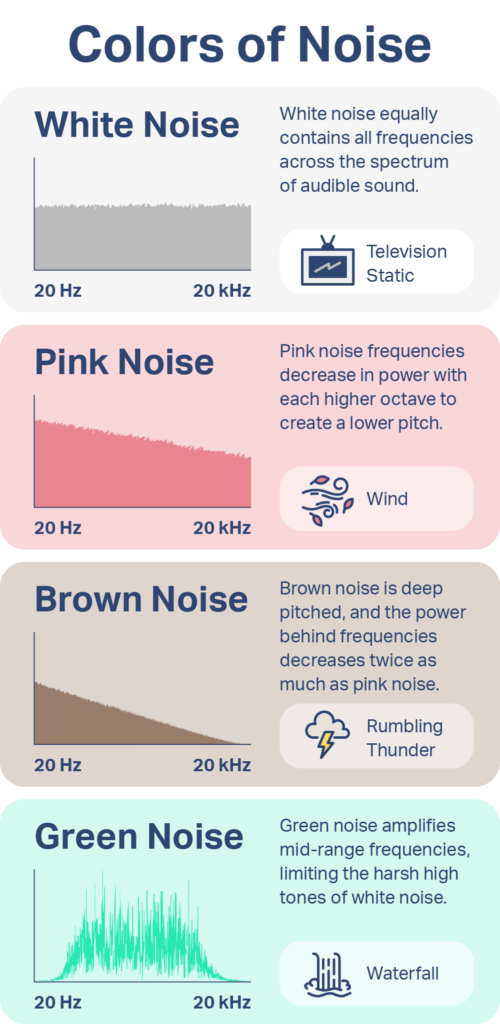
Photo derived from: Sleep Foundation
Foundational Sleep Principles
The concept of sleep hygiene was first introduced by Dr. Peter Hauri. His recommendations remain highly relevant and are still used in clinical practice today.
Key principles include:
- Sleep only as much as needed to feel rested, rather than spending excessive time in bed
- Maintain a consistent wake time to support circadian rhythm
- Engage in regular physical activity, which supports long term sleep quality
- Reduce environmental noise where possible, as even unnoticed noise can disrupt sleep architecture
- Keep the sleep environment at a comfortable temperature, avoiding excessive heat
- Avoid going to bed hungry, as mild hunger can disrupt sleep
- Use sleep medications cautiously, as long term use may not be beneficial
- Limit caffeine intake in the evening, even if sensitivity is not obvious
- Be mindful that alcohol may help with falling asleep but often leads to fragmented sleep later in the night
- If unable to sleep, get out of bed and engage in a calm activity rather than remaining in bed feeling frustrated
Final Thoughts
Sustaining sleep is not about a single intervention. It requires consistency across multiple areas including lifestyle, environment, and nervous system regulation. By addressing both the underlying causes and the habits that maintain poor sleep, it is possible to improve not only how quickly you fall asleep, but how well you stay asleep throughout the night. This blog is only for educational purpose and it is always recommended to speak with your healthcare provider if you experiencing any symptoms.
To check out more sleep supplements CLICK HERE
About the author:

Hi, I’m Abinaa, a fourth-year naturopathic medical student at the Canadian College of Naturopathic Medicine with a deep-rooted passion for natural healing, inspired by my South Asian upbringing. Through this blog, I hope to share my journey, explore topics in holistic health and wellness, and offer simple, thoughtful insights that support a more balanced and mindful way of living.