Insomnia is a common sleep disorder that affects nearly one in three people at some point in their lives. It is characterized by difficulty falling asleep, staying asleep, or waking up too early and being unable to return to sleep. As a result, individuals often experience poor sleep quality and daytime fatigue, even if they spend adequate time in bed.
Types of Insomnia
Insomnia can be classified into acute and chronic forms:
-
Acute insomnia is short-term, typically lasting a few days to a few weeks. It is often linked to a specific stressor or life event such as illness, job loss, or travel. While disruptive, it tends to resolve once the stressor is removed.
-
Chronic insomnia occurs at least three times per week for three months or longer. It may develop without a clear trigger and often requires a more comprehensive approach to treatment, including lifestyle changes and behavioural therapy.
In addition to duration, there are subtypes of insomnia that describe the pattern of sleep disruption:
-
Sleep-onset insomnia: Difficulty falling asleep at the beginning of the night.
-
Middle insomnia: Waking up during the night and struggling to fall back asleep.
-
Terminal insomnia: Waking up too early in the morning and being unable to return to sleep.
-
Mixed insomnia: A combination of sleep-onset, middle, or terminal insomnia.
-
Drug-induced insomnia: Sleep disruption caused by stimulants, corticosteroids, or certain antidepressants.
-
Psychophysiological insomnia: A learned pattern of sleeplessness where anxiety about sleep itself becomes the main barrier to rest.
What Causes Insomnia?
Not all insomnia is the same. One helpful framework is the 3P model of insomnia, which outlines how insomnia can develop and persist:
-
Predisposing factors: Traits that make someone more vulnerable to insomnia, such as anxiety-prone personality, hyperarousal, or a family history of sleep issues.
-
Precipitating factors: Triggers that initiate insomnia. These can include stressful life events, medical conditions, changes in routine, or psychological distress.
-
Perpetuating factors: Behaviours and thought patterns that maintain insomnia. Examples include staying in bed too long, irregular sleep-wake schedules, and excessive worrying about sleep.
Understanding these layers helps explain why insomnia does not always resolve on its own and often needs a multifaceted approach.
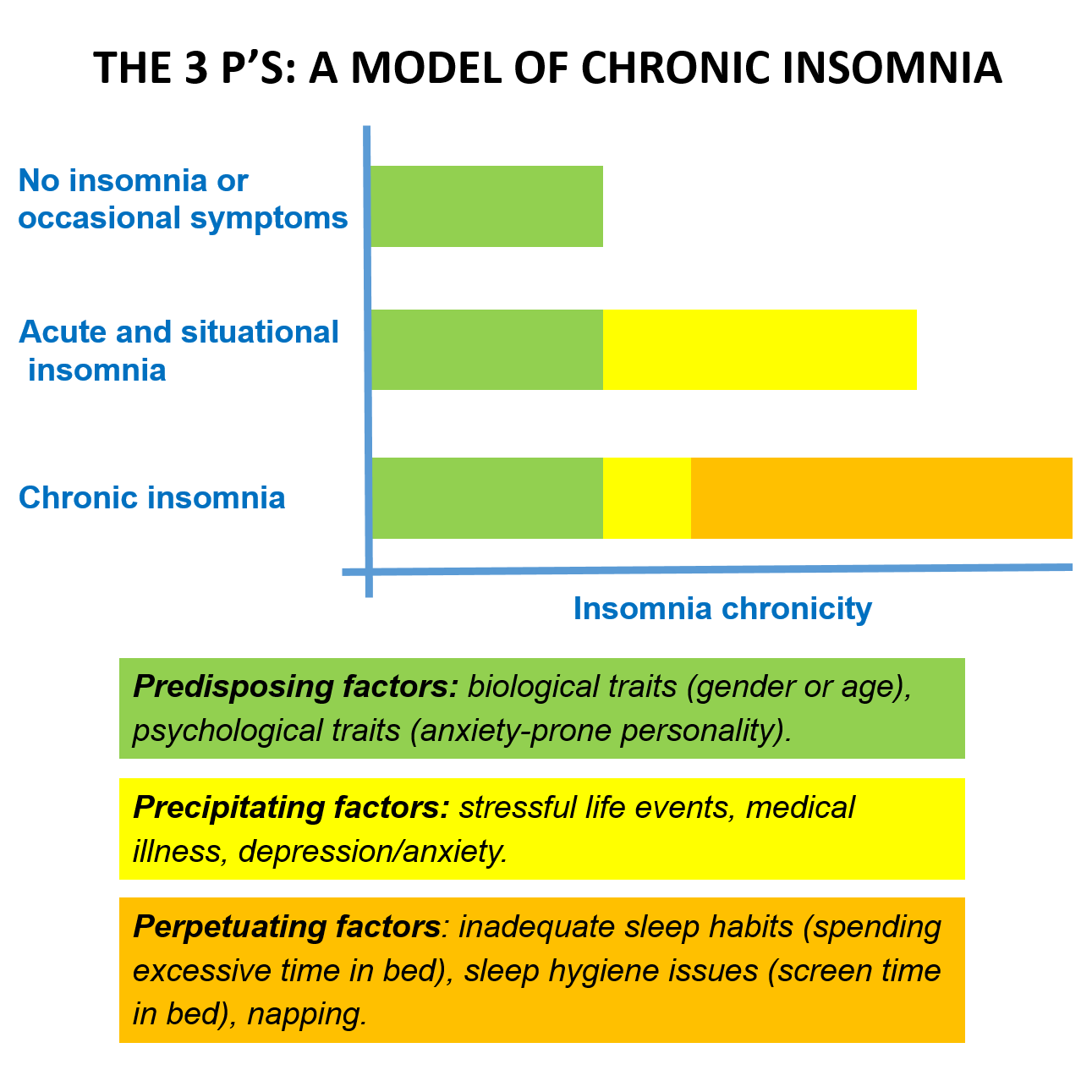
Photo credits: www.sleeponitcanada.ca
Techniques for Better Sleep
Sleep psychologists and other practitioners use several evidence-informed techniques to promote more restorative sleep. These include:
The 3-2-1 Rule
A simple method to reduce night-time disturbances:
-
Stop drinking alcohol 3 hours before bed.
-
Stop eating 2 hours before bed.
-
Stop using screens 1 hour before bed.

Sleep Hygiene Tips
Sleep hygiene refers to the habits and environmental factors that influence sleep quality. Good sleep hygiene can help improve both the duration and depth of sleep.
-
Use your bed for sleep and sex only: This helps your brain associate your bed with rest.
-
Avoid high-intensity workouts before bed: Exercise is beneficial, but try to finish vigorous workouts at least 4 hours before bedtime.
-
Create a sleep routine: A calming wind-down routine such as stretching, breathwork, or a warm bath can signal to your body that it is time to sleep.
-
Keep a sleep diary: Tracking when you fall asleep, wake up, and how you feel can help identify patterns and triggers.
-
Have a light snack if needed: Going to bed hungry can be distracting. Choose a light, protein-rich snack if needed, but avoid heavy meals within 4 hours of bedtime.
-
Only go to bed when sleepy: Do not force sleep. If you cannot sleep after 20–30 minutes, get up and do something relaxing in dim light until you feel drowsy.
-
Avoid caffeine and alcohol late in the day: Both can interfere with your body’s ability to initiate and maintain deep sleep. Aim to stop these at least 4–6 hours before bedtime.
Supplements That May Support Sleep
When lifestyle changes are not enough, certain natural supplements may help support the body’s sleep mechanisms. Always consult a healthcare provider before starting any new supplement.
-
Magnesium Bisglycinate: Magnesium is a cofactor in hundreds of enzymatic reactions. This form is highly absorbable and may help calm the nervous system, reduce cortisol, and ease muscle tension. It is also used for conditions like restless legs syndrome.
-
L-theanine: An amino acid found in green tea, it promotes alpha brain wave activity, linked to relaxed wakefulness. It may reduce the time it takes to fall asleep (sleep latency) and improve sleep quality.
-
GABA (Gamma-Aminobutyric Acid): A calming neurotransmitter that may reduce anxiety and promote restful sleep. Some studies show it can help people fall asleep faster and stay asleep longer.
-
Chamomile: A traditional herb often used as tea. It has mild sedative properties and can support sleep by reducing anxiety and helping with sleep maintenance.
-
Valerian Root: This herb may increase GABA activity in the brain, supporting deeper and faster sleep. It may also enhance the effects of other sleep-promoting agents, so caution is advised when combining it with sedatives.
-
Lemon Balm: A calming herb from the mint family that may help ease anxiety and improve sleep. Some studies show it is especially supportive for postmenopausal women.
-
Ashwagandha: An adaptogen that helps regulate cortisol and stress response. It may support longer and more continuous sleep, especially in those with stress-related insomnia.
-
Melatonin: A hormone that helps regulate the sleep-wake cycle. It is useful for people with delayed sleep patterns, frequent night awakenings, or jet lag. If you are waking at 2 a.m. consistently, this may suggest a melatonin imbalance.
When to Seek Help
While sleep hygiene and natural approaches can be helpful, persistent insomnia should not be ignored. Chronic sleep deprivation can have serious effects on mood, concentration, metabolism, and immune function. If your sleep issues are affecting your quality of life, speak to a healthcare professional for a full assessment.
Final Thoughts
Insomnia is more than just the occasional sleepless night. It can be a complex issue rooted in stress, lifestyle, mental health, and even the way we think about sleep. A combination of proper habits, stress reduction, and targeted supplementation can offer relief but the most important first step is recognizing that sleep is a foundation for health and deserves care and attention.
About the author:

Hi, I’m Abinaa, a fourth-year naturopathic medical student at the Canadian College of Naturopathic Medicine with a deep-rooted passion for natural healing, inspired by my South Asian upbringing. Through this blog, I hope to share my journey, explore topics in holistic health and wellness, and offer simple, thoughtful insights that support a more balanced and mindful way of living.